What Is Metadata? Everything You Need to Know
Have you ever wondered how your phone knows exactly where a photo was taken, or how Google finds your website among billions of pages in a split second? The answer is metadata, the quiet helper behind almost everything you do online.
Most people never think about it, but if you run a website or a business, understanding metadata can change how visible and organized your digital presence is. Let’s break it down in plain language.
So, What Exactly Is Metadata?
Metadata is simply data about data. It’s the information that describes, explains, or gives context to other information.
Think of a book in a library. The story inside is the data. The title, author, publication date, genre, and ISBN are the metadata. You don’t need them to read the book, but without them, finding the right book in a huge library would be nearly impossible.
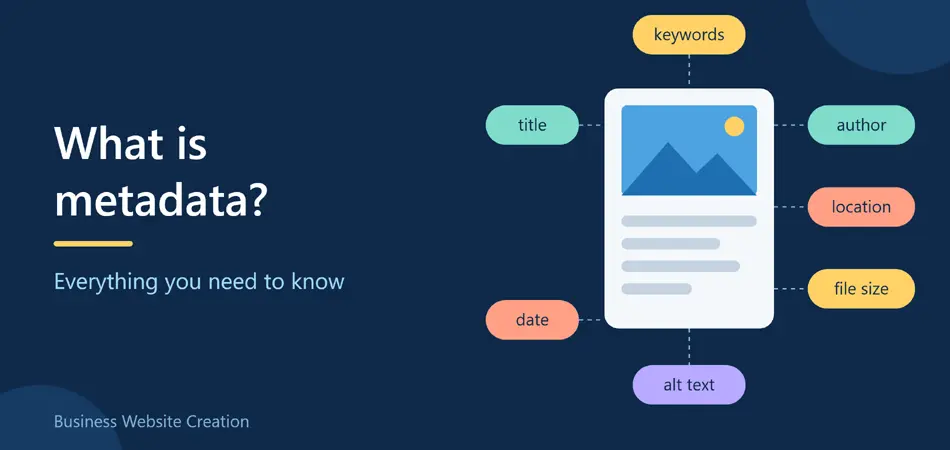
Digital files work the same way. A photo contains the image itself, but its metadata tells you when it was taken, what camera was used, the file size, and sometimes even the location.
Common Types of Metadata
Metadata comes in several forms, and each plays a different role.
- Descriptive metadata helps people find and identify content. Titles, keywords, summaries, and author names fall into this group.
- Structural metadata shows how information is organized. For example, it tells a system that chapters belong in a certain order within an ebook.
- Administrative metadata covers the technical side: file type, creation date, permissions, and ownership rights.
- Statistical metadata describes how data was collected and processed, which is common in research and analytics.
Everyday Examples You Already Know
You use metadata far more often than you realize:
Emails: sender, recipient, date, and subject line
Music files: artist, album, track length, and cover art
Documents: author name, last-modified date, and word count
Social media posts: hashtags, timestamps, and tagged locations
Photos: camera settings, resolution, and GPS coordinates
None of this is the “main” content, yet it makes everything easier to search, sort, and manage.
Why Metadata Matters for Your Website
Here’s where it gets interesting for business owners. Search engines can’t “see” your website the way humans do. They rely on metadata to understand what each page is about and decide whether to show it to searchers.
The most important website metadata includes:
Title tags: the clickable headline shown in search results
Meta descriptions: the short summary beneath the title that persuades people to click
Alt text: descriptions of images, which help search engines and visually impaired visitors
Open Graph tags: the details that control how your page looks when shared on social media
Schema markup: structured data that helps Google display rich results such as reviews, prices, and FAQs
A page with strong, well-written metadata is much more likely to attract clicks, even if it ranks in the same position as a competitor. It’s a small detail with a big payoff.
How Metadata Improves SEO and User Experience
Good metadata does two jobs at once. For search engines, it clarifies your content so your pages can rank for the right searches. For people, it sets honest expectations before they even visit your site. When your title and description match what visitors actually find, they stay longer, bounce less, and trust you more.
That’s why metadata isn’t just a technical afterthought. It’s part of your first impression.
Metadata on Popular Website Platforms
The good news is you don’t need to be a developer to manage metadata. Modern platforms make it surprisingly approachable, though the approach varies.
On Wix, you can edit page titles, descriptions, social share images, and URLs directly from the SEO settings panel. It’s beginner-friendly, but getting the strategy right still takes experience. That’s where professional wix web development services can help, from structuring your pages properly to setting up clean, search-friendly metadata across the entire site.
On WordPress, you get even more flexibility. With SEO plugins and custom code, you can control everything from canonical tags to advanced schema markup. If you want a site that’s fully optimized and built to scale, expert wordpress development services can make sure every page is set up the right way from day one.
Whichever platform you choose, the principle stays the same: clear, accurate, keyword-aware metadata helps the right people find you.
Best Practices for Writing Great Metadata
Ready to put this into action? Keep these tips in mind:
Be specific and honest. Describe what the page truly offers.
Use keywords naturally. Include your main phrase once or twice, but never stuff it in.
Mind the length. Aim for title tags under 60 characters and meta descriptions around 150-160 characters.
Make every page unique. Duplicate metadata confuses search engines.
Write for humans first. A compelling description earns clicks, and clicks matter.
Review regularly. As your business grows, update old metadata to match.
Common Mistakes to Avoid
Even well-meaning site owners slip up. Leaving metadata blank, copying the same description across multiple pages, using vague titles like “Home” or “Untitled,” or forgetting alt text on images are all frequent culprits. Each one is a missed opportunity to be found.
Final Thoughts
Metadata may work behind the scenes, but its impact is anything but small. It helps search engines understand your content, helps visitors know what to expect, and keeps your digital assets organized. For any business with an online presence, getting it right is one of the simplest and most cost-effective ways to improve visibility.
If managing all of this feels overwhelming, you don’t have to figure it out alone. At Business Website Creation, our team helps businesses build fast, search-friendly websites with metadata done right from the start. Whether you need reliable wix web development services or tailored wordpress development services, we’re here to turn your website into a tool that works as hard as you do.
Ready to get found online? Get in touch with Business Website Creation today and let’s build something that stands out.