10 Web Design Trends for 2026: How to Build a Business Website That Attracts Customers & AI Search
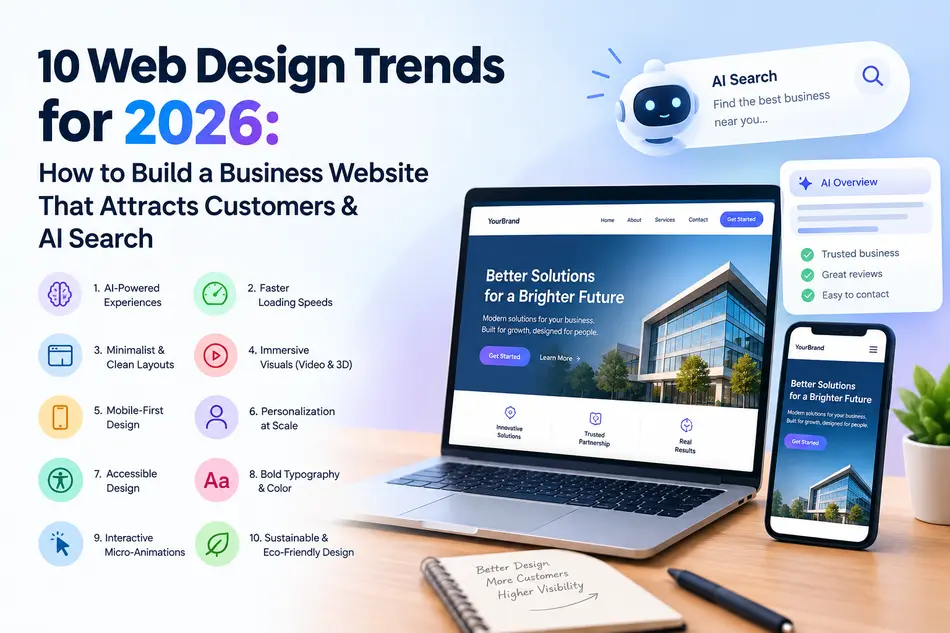
The way people find and judge businesses online is changing fast, and web design trends 2026 reflect that shift. Search is no longer just about ranking on Google — it’s about being understood by AI engines, loading instantly, and building trust within seconds. If you’re planning a modern business website, here are the ten trends shaping website design trends this year.
1. AI-Ready Website Design
Websites are no longer built only for human visitors — they’re built for AI crawlers too. AI website design means structuring content with clean HTML, semantic tags, and clear headings so AI tools can accurately read, summarize, and represent your business. Clear content hierarchy and well-labeled sections now directly affect how AI systems interpret your brand.
2. Websites Optimized for AI Search & AI Overviews
With AI Overviews and chat-based search growing, AI search optimization is now essential. This means writing content that directly answers common customer questions, using structured data (schema markup), and avoiding vague marketing fluff. Businesses that structure content clearly — with FAQs, definitions, and concise answers — are more likely to be pulled into AI-generated summaries and voice search results.
3. Faster, Performance-First Websites
Speed is no longer optional. Both users and AI crawlers abandon slow sites quickly. Performance-first design in 2026 focuses on:
- Optimized images and lazy loading
- Minimal, efficient code
- Fast hosting and CDN delivery
- Core Web Vitals compliance
A slow website hurts conversions and rankings — two things every business website depends on.
4. Conversion-Focused Homepage Design
Your homepage has seconds to convince a visitor to stay. A strong business website design in 2026 leads with a clear value proposition, a visible call-to-action, and minimal distractions. Instead of decorative sliders or long intros, homepages are being designed around one goal: guiding visitors toward a decision, whether that’s booking a call, requesting a quote, or making a purchase.
5. Personalized Website Experiences
Generic websites are losing engagement. Personalization — powered by AI and behavioral data — now shapes what visitors see based on location, browsing history, or referral source. This could mean dynamic homepage messaging, tailored product recommendations, or location-specific offers. Personalized experiences increase relevance, engagement, and ultimately, conversions.
6. Mobile-First & Responsive Design
Mobile traffic continues to dominate, making mobile-first design non-negotiable. This goes beyond “responsive” layouts — it means designing the mobile experience first, then scaling up. Thumb-friendly navigation, fast-loading mobile pages, and simplified layouts are core to any competitive website development trends 2026 strategy.
7. Minimalist Design With Strong Brand Personality
Minimalism remains dominant, but 2026’s version isn’t plain — it’s purposeful. Clean layouts, generous white space, and simple navigation are paired with bold typography, distinct color palettes, and unique visual identity. The goal is a site that feels uncluttered yet unmistakably branded, avoiding the “template-look” that many AI-generated or drag-and-drop sites fall into.
8. Accessibility-First Web Design
Accessibility has moved from an afterthought to a design foundation. This includes proper color contrast, keyboard navigation, alt text, readable fonts, and screen-reader compatibility. Beyond legal compliance, accessible websites reach a wider audience and often perform better in search — since many accessibility best practices overlap with strong technical SEO.
9. Trust-Building Elements for Business Websites
With AI-generated content and scams on the rise, trust signals matter more than ever. Effective business website design in 2026 includes:
- Verified reviews and testimonials
- Real team photos and business details
- Security badges and clear privacy policies
- Transparent pricing or service information
These elements reassure both human visitors and AI systems evaluating credibility and authority.
10. Clearer CTAs and Simplified Navigation
Confusing menus and vague buttons (“Learn More,” “Click Here”) are being replaced with direct, action-oriented CTAs like “Get a Free Quote” or “Book Your Consultation.” Navigation is also being simplified — fewer menu items, clearer labels, and intuitive paths that reduce decision fatigue and guide users straight to conversion points.
Final Thoughts
The businesses that succeed in 2026 will be the ones that treat their website as a living system — fast, accessible, AI-readable, and built around genuine user trust. Whether you’re redesigning an existing site or building a modern business website from scratch, aligning with these ten web design trends will help you stay visible to both human customers and AI-driven search.